
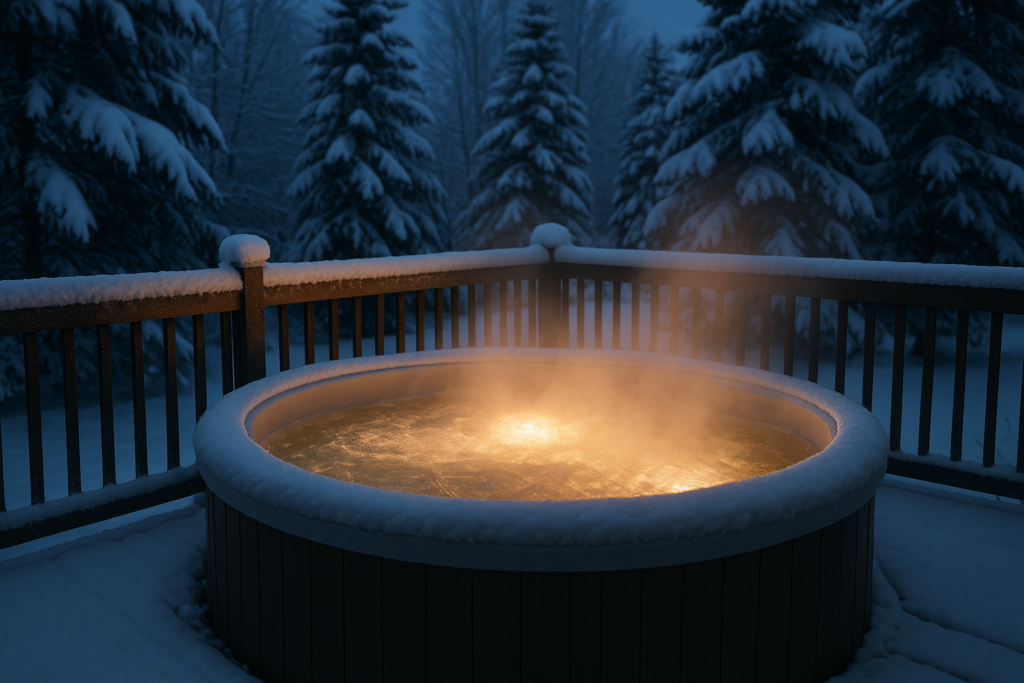
When temperatures in Winnipeg plunge to -30°C or colder, a frozen hot tub isn’t just an inconvenience—it’s a potential disaster that can crack your shell, burst your plumbing, and cost thousands in repairs. The good news? With the right precautions, you can keep your spa running smoothly all winter long, even through the coldest Manitoba nights. Here’s exactly what you need to do to prevent hot tub freezing in Winnipeg’s brutal winter conditions.
Keep Your Hot Tub Running 24/7
The single most important rule for winter hot tub ownership in Manitoba is simple: never turn off your hot tub during freezing weather. Your spa is designed to run continuously, and the circulation pumps keep water moving through the lines, preventing ice from forming. Set your thermostat to at least 38°C (100°F)—higher if you use it frequently. Even if you’re not using your tub for a few weeks, resist the temptation to power it down to save on electricity. The cost of running your heater is a fraction of what you’d pay to repair freeze damage.
Modern hot tubs have freeze protection modes that automatically activate pumps when temperatures drop, but these are backup systems, not primary solutions. They only kick in when the water temperature falls dangerously low, and if there’s a power outage or equipment failure, you’re at risk. Maintaining consistent heat is your first line of defense.
Invest in a Quality Cover and Proper Insulation
A well-fitted, high-quality cover is non-negotiable for Winnipeg winters. Your cover should be rated for cold climates, with at least 15-20 cm (6-8 inches) of tapered foam insulation. Check the cover’s condition before winter hits—cracks, waterlogged foam, or a poor seal around the edges will let heat escape rapidly, forcing your heater to work overtime and potentially allowing exposed areas to freeze.
Lock your cover down securely with the straps or clips. Wind chill on exposed water can drop surface temperatures fast, and a cover that blows open during a January blizzard can spell disaster. If your cover is more than five years old or showing signs of wear, replace it before the cold sets in. You can explore options for new hot tubs that come with premium covers designed for our climate.
Monitor and Maintain Water Levels
Low water levels expose jets, heaters, and pump intakes to air, which can lead to freeze damage in those components. Check your water level weekly throughout winter—it should sit halfway up your skimmer opening. Evaporation happens faster than you’d think, even in cold weather, especially if you’re using your tub regularly and removing the cover.
When topping up, use a hose that you can drain completely afterward, or bring warm water out in buckets. Never leave a hose connected to your outdoor tap in freezing weather, and don’t let water sit in the hose—it will freeze solid and potentially damage your home’s plumbing. Add water slowly to avoid shocking your system with cold water, which forces your heater to work harder.
Prepare for Power Outages
Manitoba winter storms can knock out power for hours or even days. If you lose electricity, your hot tub will start to freeze within 6-12 hours, depending on the outdoor temperature and how well-insulated your tub is. Keep heavy blankets or sleeping bags on hand to layer over your cover for extra insulation during an outage. Some hot tub owners invest in a backup generator—if you go this route, make sure it’s sized to handle your spa’s electrical load.
If power is out for an extended period and you can’t restore it, you may need to drain your tub to prevent freeze damage. This is a last resort and should only be done if you’re certain power won’t return in time. Draining in extreme cold is tricky and best handled by professionals, so have a plan and a contact ready before you need it. Regular hot tub maintenance can also ensure your equipment is in top shape to weather any emergency.
Replace Filters and Check Equipment
Clogged or dirty filters restrict water flow, which can lead to freeze-ups in your plumbing lines. Clean your filters every month during winter, and replace them according to your manufacturer’s schedule—typically every 12-18 months. You can find quality replacement options at Swim & Spas’ filter shop. Also inspect your pumps, heater, and control panel before the deep cold arrives. Any hesitation, strange noises, or error codes should be addressed immediately, because equipment failure in January can quickly turn into a frozen mess.
If you’re ever unsure about winterizing steps, need emergency service, or want a pre-winter inspection to prevent hot tub freezing in Winnipeg’s harsh conditions, the team at Swim & Spas is here to help. Reach out through their hot tub maintenance services to keep your spa safe and running all season long.