
As hot tub enthusiasts increasingly seek sustainable and eco-friendly maintenance solutions, the appeal of natural alternatives to traditional hot tub chemicals grows. Embracing such options not only enhances environmental responsibility but also offers a gentler yet effective approach to water care. Whether you’re keen to reduce chemical use for health reasons or contribute to sustainable practices, a variety of natural products can maintain crystal-clear water. Explore this guide to discover the best natural hot tub care alternatives in 2025 that promise both excellent performance and peace of mind without compromising on hygiene or enjoyment.
Key Highlights
- Natural hot tub alternatives are eco-friendly and reduce allergic reactions from traditional chemicals.
- Saltwater systems offer soft water and require less chemical maintenance, aligning with sustainability.
- Essential oils enhance the spa experience with therapeutic benefits and pleasant fragrances.
- Hydrogen peroxide and baking soda are effective natural sanitizers, improving water quality.
- Adopting natural alternatives promotes a healthier, environmentally friendly hot tub experience.
Exploring Natural Alternatives for Hot Tub Chemicals
As 2025 approaches, more people are seeking chemical-free approaches to hot tub care. Exploring natural alternatives not only keeps your spa experience healthier but also aligns with environmentally-friendly practices. From utilizing mineral bag systems to integrating enzyme treatments, there are numerous ways to maintain your hot tub that circumvent traditional spa products. Discover how these approaches can benefit both you and the environment, and learn about some of the most popular natural alternatives. Visit here to explore different hot tub options that support a better experience.
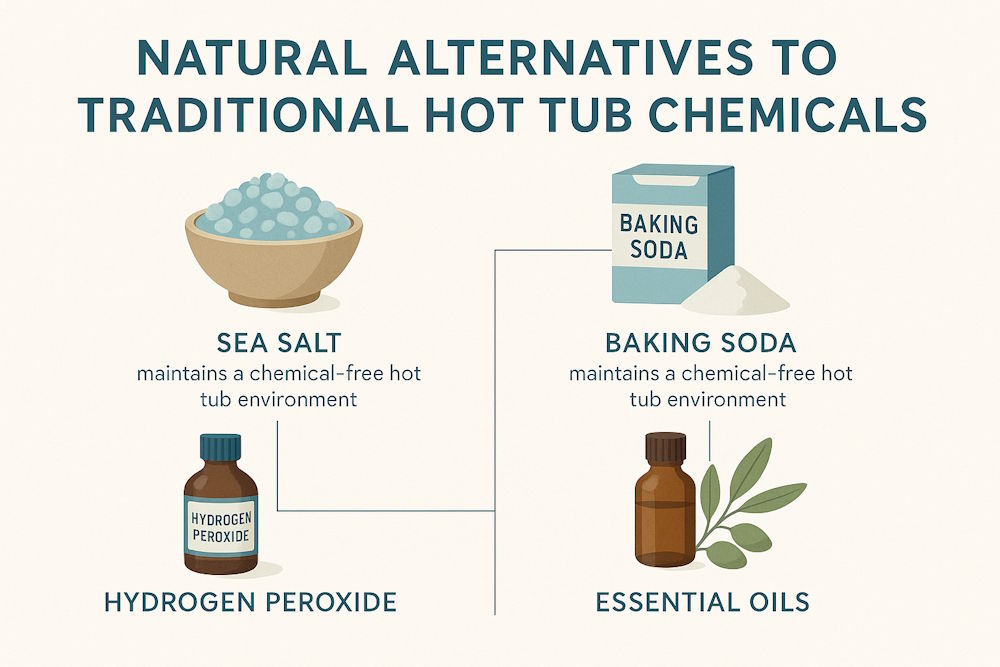
Benefits of Using Natural Alternatives
Switching to natural alternatives for hot tub care offers numerous advantages that go beyond just being chemical free. For starters, they are gentler on the skin, reducing the risk of allergies often caused by traditional sanitizers. Natural products like vinegar, which is one of the champs in combating bacteria, can easily replace harsher chemicals. Enzyme treatments offer a unique way to break down organics in the water, making your tub feel fresher without the chemical exposure. Additionally, products like mineral bag systems not only sanitize the water but also add essential trace minerals, enhancing the overall spa experience.
The Role of Saltwater Hot Tubs in Modern Relaxation
The rise of saltwater hot tub systems marks a significant shift towards chemical-free relaxation in spa care. These systems have been increasingly favored for their ability to provide a softer, more enjoyable spa experience while minimizing the necessity for traditional chemicals like chlorine and bromine. In addition to being a healthier option for both people and the environment, saltwater systems align perfectly with the ethos of sustainability. Join us as we explore the advantages of using saltwater hot tub systems, which continue to redefine luxury and wellness in the world of spa care.
Advantages of Saltwater Systems
Saltwater hot tub systems offer numerous benefits that make them a superior choice for spa enthusiasts. One of the primary advantages is their ability to naturally maintain water quality without the harsh effects of chemicals like chlorine and bromine. This results in a more skin-friendly environment and reduces the need for additional chemical products. Saltwater systems also produce a softer feel to the water, enhancing comfort while soaking. The maintenance involved is typically more straightforward as well, primarily due to the reduced need for chemical adjustments. Furthermore, these systems contribute to the sustainability goals of many users, employing natural alternatives that align with eco-friendly water care practices. In embracing saltwater systems, spa owners can enjoy a relaxing, chemical-free, and environmentally conscious experience.
Enhancing Your Hot Tub Experience with Essential Oils
Incorporating essential oils into your hot tub care routine can significantly enhance your overall spa experience. These natural alternatives not only provide therapeutic benefits but also create a more enjoyable atmosphere by infusing the water with delightful fragrances. By choosing the right essential oils, you can tailor your hot tub sessions to reduce stress, promote relaxation, and even offer skin-care benefits. This approach aligns with the growing trend of eco-friendly and chemical-free spa maintenance, complementing methods like enzyme treatments and mineral bag systems. Dive into the aromatic world of essential oils and transform your hot tub into a personal wellness retreat.
Choosing the Right Essential Oils for Your Hot Tub
Selecting the appropriate essential oils is crucial for maximizing the benefits while ensuring the safety of your hot tub. Oils such as lavender, eucalyptus, and tea tree are excellent choices due to their calming, rejuvenating, and antibacterial properties. Lavender is renowned for its ability to help reduce stress and promote relaxation, making it perfect for evening soaks. Eucalyptus, with its invigorating scent, helps in clearing sinuses and boosting mental clarity, while tea tree oil acts as a natural antiseptic, enhancing water hygiene without resorting to harsh tub chemicals. When adding these oils to your hot tub, it’s crucial to ensure they are fully diluted and used in moderation to prevent any damage to the water systems or tub surfaces.
Alternative Sanitizers: Hydrogen Peroxide and Baking Soda
Embracing alternative sanitizers like hydrogen peroxide and baking soda in 2025 offers a cleaner, greener path for hot tub care. These natural options provide a great solution for those looking to avoid traditional tub chemicals. Hydrogen peroxide acts as an effective tub sanitizer, while baking soda enhances water quality by balancing pH levels without the harshness of conventional chemicals. These methods not only yield a healthier, more enjoyable soaking experience but also support sustainable spa maintenance practices.
Using Hydrogen Peroxide as a Hot Tub Sanitizer
Hydrogen peroxide emerges as a powerful alternative to traditional chlorine-based sanitizers, proving effective in keeping hot tub water clean and free from bacteria. By oxidizing contaminants, hydrogen peroxide ensures a sparkling clean hot tub without the residual smell or harsh effects typical of conventional chemicals. It’s an ideal choice for spa owners seeking a chemical-free solution that safeguards their skin and the environment. The use of hydrogen peroxide in hot tubs reflects a shift towards more eco-friendly and health-conscious spa care, offering peace of mind and comfort in every soak.
Hydrogen Peroxide for Hot Tub Sanitation: An Eco-Friendly and Health-Conscious Choice
- Eco-friendly: Unlike traditional chlorine or bromine, hydrogen peroxide breaks down into water and oxygen, making it an environmentally safe option.
- Health-conscious: Reduces the presence of harsh chemicals and potential skin or respiratory irritants often found in other sanitizing options.
Guide to Optimizing Hydrogen Peroxide Use:
- Measure the correct concentration according to hot tub size for effective sanitation.
- Regularly test water quality to maintain optimal hydrogen peroxide levels.
- Store hydrogen peroxide in a cool, dark place to preserve its effectiveness.
- Avoid mixing with chlorine or bromine to prevent chemical reactions.
- Replace or refresh the solution regularly to ensure lasting cleanliness and safety.
- Ensure proper ventilation when applying to enhance safety and effectiveness.
- Educate yourself on hydrogen peroxide compatibility with your hot tub materials.
Implement these practices to fully harness the benefits of hydrogen peroxide in your hot tub care routine, enhancing both performance and sustainability.
Practical Tips for Maintaining a Healthy Hot Tub
Maintaining a healthy hot tub using natural alternatives can significantly enhance your spa experience. Embracing chemical-free products, such as mineral bag systems and enzyme treatments, offers an eco-friendly approach that reduces the dependency on traditional sanitizers like chlorine and bromine. This shift not only supports sustainability but also ensures a soothing, skin-friendly environment. Dive deeper into the practical methods for seamlessly integrating these alternatives into your routine, ensuring your hot tub remains a source of relaxation and wellness.
Creating a Sustainable Routine with Natural Products
Creating a sustainable hot tub routine involves incorporating natural products like vinegar, hydrogen peroxide, and baking soda into your maintenance schedule. Vinegar is one effective option for cleaning surfaces, offering a chemical-free way to eliminate grime. Hydrogen peroxide serves as a potent sanitizer, safeguarding your hot tub water from bacteria and contaminants naturally. Meanwhile, baking soda enhances water quality by maintaining balanced pH levels, making it a valuable addition to your maintenance routine. By choosing these natural alternatives over traditional tub chemicals, not only do you protect the environment, but you also enjoy a healthier, more gratifying soak.
Incorporating natural alternatives into your hot tub care routine not only fosters an eco-friendly environment but also enhances the wellness experience. By reducing reliance on harsh chemicals, you ensure a safer soak for you and your family. With 2025 approaching, explore various options like mineral-based purifiers and organic sanitizers to maintain sparkling clean water. Additionally, consider consulting with experts to tailor these solutions to your needs. For more insights on sustainable hot tub maintenance, download our comprehensive guide and join our community of eco-conscious hot tub enthusiasts today.